About

Built inside university assessment offices, then spun out when no platform existed to replace what we were building manually

In 2022, Darnell Mitchell was directing assessment services at a Southeastern university system — supervising placement tests, managing item banks, and watching institutions accept static 100-question tests as substitutes for real ability estimation. The IRT science existed. The item calibration methods were textbook. What didn't exist was a platform that packaged them into something a department budget could approve, an LMS administrator could deploy in a day, and an accreditor could accept as evidence of genuine measurement.

LearnVyx team working together in a collaborative office space in Atlanta, Georgia
Our Mission

Make precision measurement accessible to every institution — not just testing consortia with eight-figure contracts

Assessment science has known for decades that adaptive testing produces better ability estimates with fewer items. The IRT models underpinning major standardized exams (GRE, GMAT, LSAT) are not new. What's new is the assumption that only large testing organizations can run them. LearnVyx challenged that assumption by packaging a full 3PL IRT engine with Bayesian calibration into a platform that a single department can deploy via LTI 1.3 in an afternoon, at pricing a department budget can approve without a VP's signature.

A note on what we are and are not: LearnVyx is an assessment engine and credentialing platform. We are not a learning management system — we don't manage course content, enrollment, or curriculum delivery. We sit alongside your LMS (Canvas, Blackboard, Moodle) as the measurement layer, not a replacement for it. We are also not a hardware proctoring vendor. We don't operate cameras, conduct identity scans, or lock browsers. Our integrity model works at the scoring layer, not the surveillance layer.

2022
Founded in Atlanta, GA
14+
University and enterprise clients
84K+
Adaptive assessment sessions delivered
4
Full-time team members (psychometrics, engineering, customer success)
The Team

The people behind LearnVyx

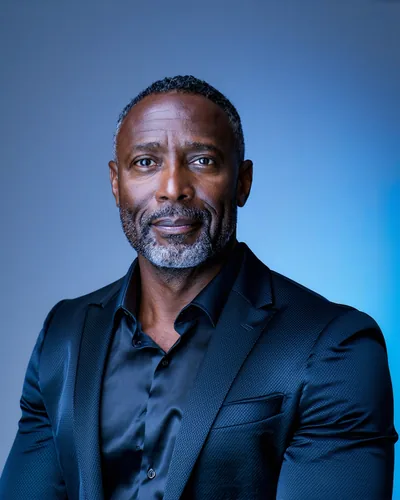
Darnell Mitchell, CEO and Co-Founder of LearnVyx
Darnell Mitchell
CEO & Co-Founder
Directed assessment services at a Southeastern university system from 2018 to 2022, managing placement testing for ~8,000 incoming students annually across three campuses. Observed the gap between available IRT science and available platforms, and co-founded LearnVyx in Atlanta in 2022 to close it. PhD candidate, Educational Measurement & Statistics, Georgia State University.
LearnVyx CTO and Co-Founder
Isabel Reyes
CTO & Co-Founder
Built the real-time scoring infrastructure at an international testing organization. Seven years of IRT engine development experience. MS Computer Science with specialization in distributed systems, Georgia Tech.
LearnVyx Head of Psychometrics
Dr. Kwame Osei
Head of Psychometrics
PhD, Quantitative Methods in Education, University of Minnesota. Previously led item analysis and score reporting for a major professional certification program. Author of peer-reviewed work on behavioral signal detection in adaptive testing contexts.
LearnVyx Head of Customer Success
Priya Sundaram
Head of Customer Success
Former L&D technology consultant at a Big 4 firm, focused on HCM platform implementations and skills taxonomy architecture. 8 years of experience implementing assessment programs inside enterprise training functions.
How We Work

Three operating principles

Measurement integrity above marketing claims
We don't describe our scoring model as "cheat-proof" in the absolute sense — no model is. We describe what it detects, at what confidence level, and where human judgment still belongs. Psychometric validity means being honest about your instrument's limits.
Learner-centered design
Adaptive testing should reduce cognitive load, not increase anxiety. Our item selection algorithm is designed to converge on measurement precision quickly — keeping most assessments under 22 items — because we believe the test should serve the measurement goal, not the other way around.
Radical transparency in the score
Every LearnVyx score includes the standard error of measurement, the RPIS integrity score, and the confidence interval on the ability estimate (θ). If an institution asks "how sure are you?", the answer is already in the output — not a follow-up conversation.
Work With Us

Interested in joining the team?

We're a small team with a large technical and scientific footprint. If you have a background in psychometrics, educational technology, or enterprise software and want to work on measurement that institutions can actually defend — reach out.