Adaptive testing powered by Item Response Theory
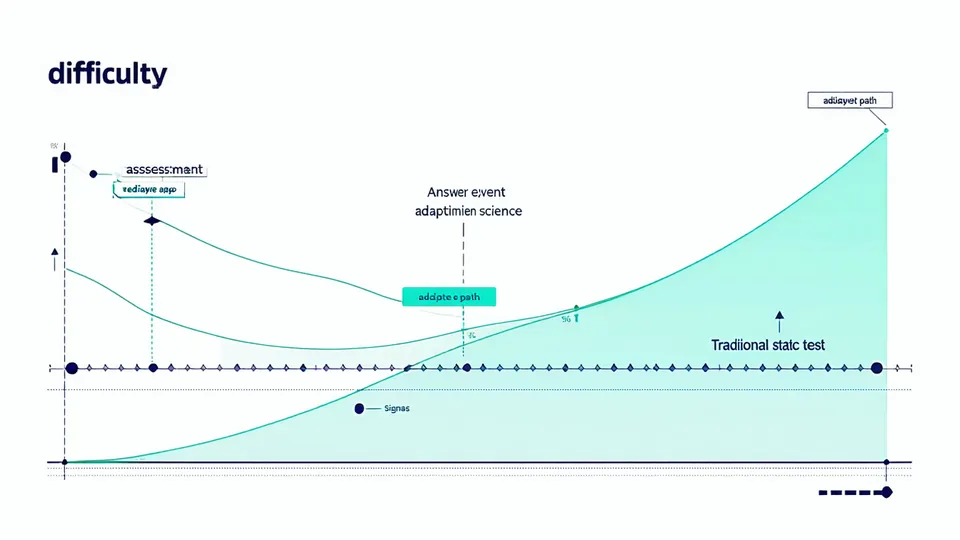
Every learner gets a different exam — one that's always measuring at the exact difficulty level where they provide the most information. The result: 40–60% fewer questions for the same measurement precision as a static 100-item test.
How the adaptive algorithm works
The engine implements the 3-Parameter Logistic (3PL) IRT model. Each item in your bank has three calibrated parameters: difficulty (b), discrimination (a), and pseudo-guessing (c). After each response, a Maximum Likelihood Estimate (MLE) updates the latent ability estimate (θ).
Response latency is folded in as a Bayesian prior — unusually fast correct answers reduce the weight of that response; unusually slow correct answers increase the information yield estimate. The next item is selected to maximize Fisher Information at the current θ.
Everything your assessment program needs
See the engine adapt in real time
We'll walk you through a live demonstration with your own subject matter — watch the 3PL model branch in real time as we answer questions at varying ability levels.